4 inch round steel tubing is a versatile structural component widely used across numerous industries, from construction and manufacturing to automotive and agriculture. Its strength, durability, and relatively lightweight nature make it an ideal choice for a wide range of applications. For businesses involved in international steel trading, understanding the nuances of this particular tubing is crucial for meeting client demands and ensuring successful transactions. This article will provide a comprehensive overview of 4 inch round steel tubing, covering its specifications, applications, common standards, and considerations for efficient global sourcing.
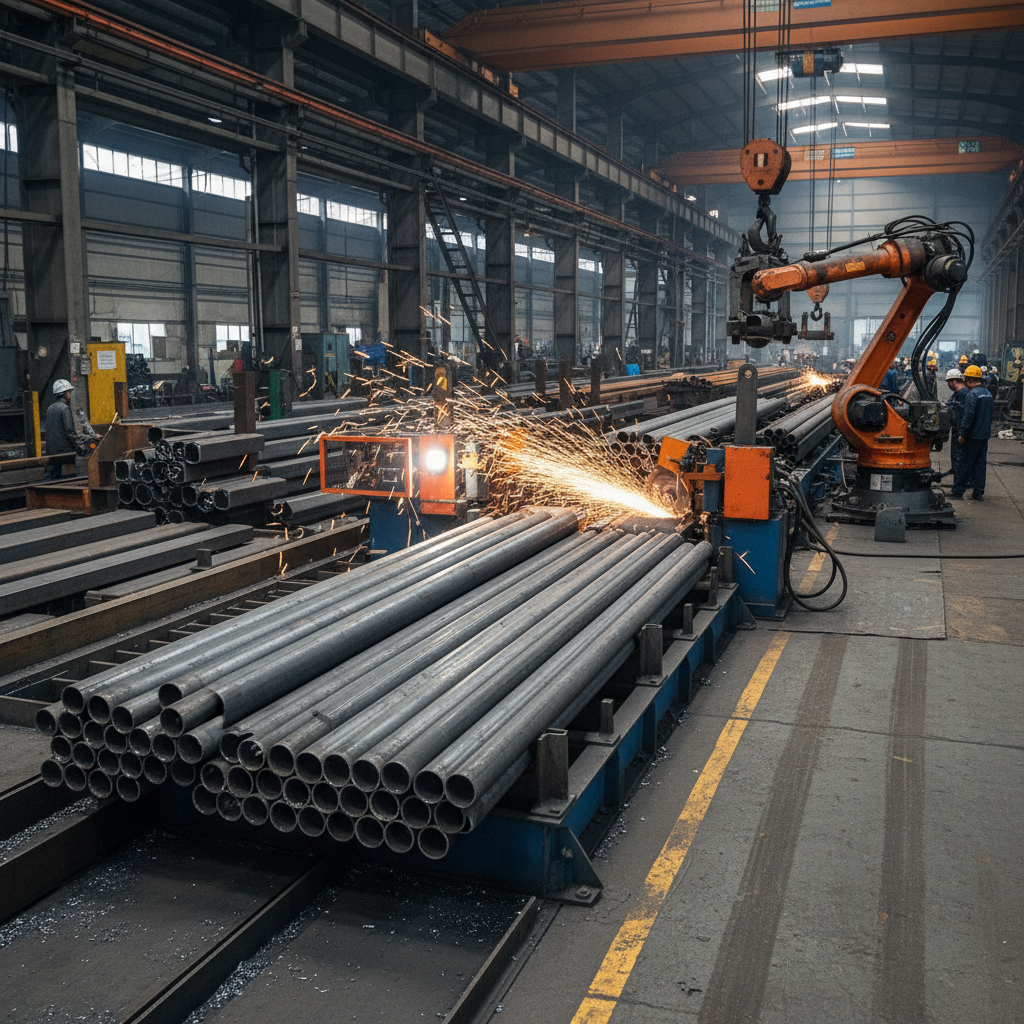
The term “4 inch round steel tubing” refers to steel pipes with an outer diameter of four inches and a circular cross-section. These tubes are manufactured through various processes, including welding, drawing, and seamless extrusion. The choice of manufacturing method significantly impacts the tube’s strength, precision, and cost. Common steel grades used for 4 inch round steel tubing include A53, A106 (for higher temperature applications), and 1018 carbon steel. Wall thickness varies depending on the application, commonly ranging from schedule 40 to schedule 80, influencing the tube’s load-bearing capacity and weight. Understanding these factors is essential when sourcing steel tubing from international suppliers.
Key Highlights: Available in various steel grades (A53, A106, 1018), different wall thicknesses (Schedule 40, 80), and manufactured through welding, drawing or seamless extrusion.
The versatility of 4 inch round steel tubing makes it a staple in diverse industries. In construction, it is frequently utilized for structural supports, handrails, and scaffolding. The automotive sector employs it for roll cages, chassis components, and exhaust systems. Agricultural applications include irrigation systems, greenhouse frames, and machinery parts. Manufacturing processes use it for creating frames, supports, and moving parts. The oil and gas industry utilizes it for pipelines, well casings, and drilling equipment.
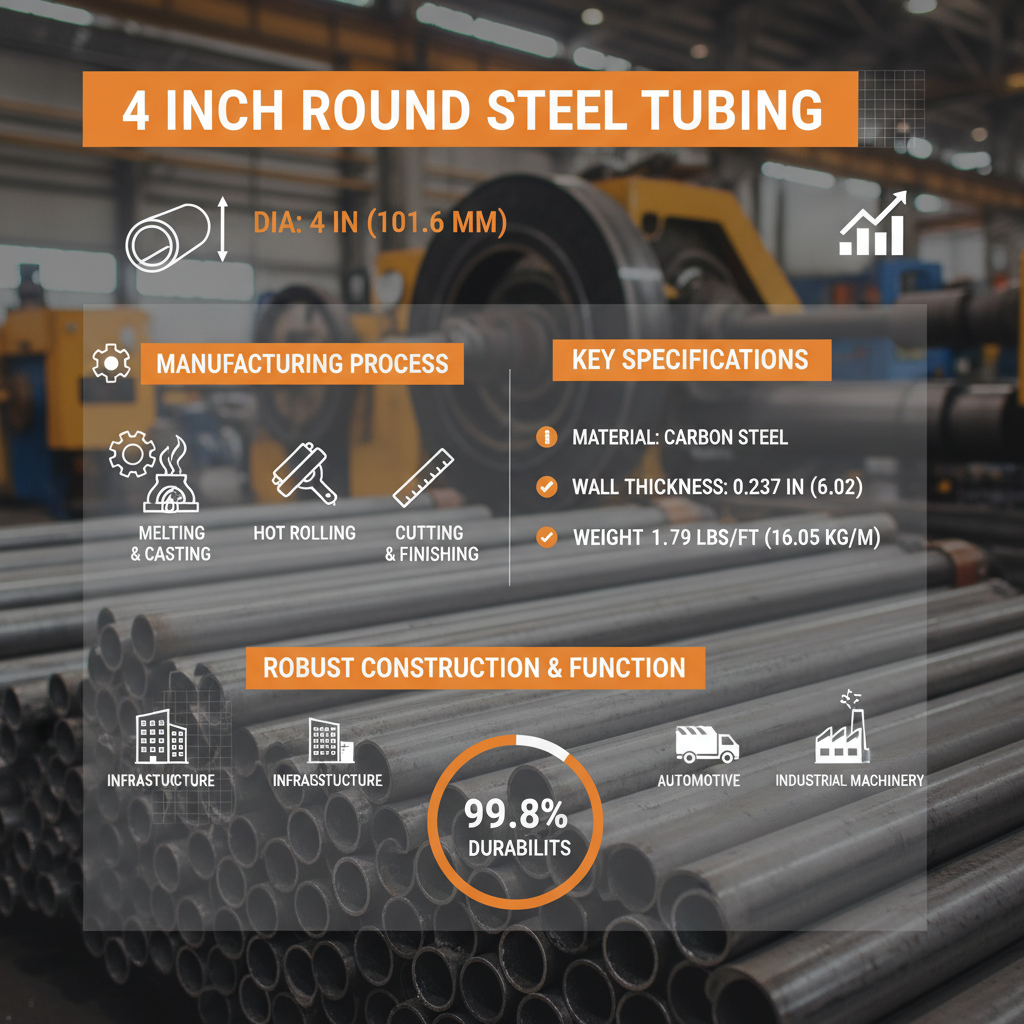
Common Application Areas:
• Construction: Structural supports, handrails, scaffolding
• Automotive: Roll cages, chassis components, exhaust systems
• Agriculture: Irrigation, greenhouse frames, machinery
• Oil & Gas: Pipelines, well casings
Selecting the right steel grade and schedule is critical for ensuring the tubing meets specific application requirements. A53 steel is a common general-purpose option, while A106 is preferred for higher-temperature services. 1018 carbon steel offers good weldability and machinability. Schedule 40 tubing is lighter and suitable for lower-pressure applications, while Schedule 80 provides increased strength and is ideal for high-pressure or heavy-duty uses. The following table provides a comparison of common steel grades and schedules. This is important information for businesses specializing in steel pipe export.
When sourcing 4 inch round steel tubing internationally, adherence to recognized standards like ASTM (American Society for Testing and Materials) and EN (European Norms) is paramount. These standards define material specifications, manufacturing processes, and quality control procedures. Ensure suppliers provide material test reports (MTRs) verifying the steel’s chemical composition and mechanical properties. Third-party inspection agencies can further validate quality and compliance. Understanding Incoterms (International Commercial Terms) is also vital for defining responsibilities and costs associated with transportation and insurance.
Successfully navigating the global market for 4 inch round steel tubing requires a thorough understanding of product specifications, industry standards, and international trade practices. By prioritizing quality control, adhering to relevant standards, and partnering with reputable suppliers like Lion Pipeline, businesses can ensure a reliable supply of this essential structural component.
Lead times can vary significantly depending on the supplier's location, production capacity, and current order backlog. Generally, expect a lead time of 4-8 weeks for standard orders. However, customized orders or large quantities may require longer lead times. It's crucial to clearly communicate your delivery requirements with the supplier upfront and obtain a firm delivery schedule. Factors like shipping routes, customs clearance, and potential delays at ports should also be considered when estimating the overall delivery timeline. Working with a reliable logistics partner can help streamline the process and minimize potential delays.
Commonly used Incoterms for international steel tubing transactions include FOB (Free On Board), CIF (Cost, Insurance, and Freight), and DDP (Delivered Duty Paid). FOB places the responsibility for shipping and insurance on the buyer, while CIF requires the seller to cover these costs. DDP places all responsibilities, including import duties and taxes, on the seller. The choice of Incoterm should be carefully considered based on the buyer's and seller's preferences and risk tolerance. Clear understanding and agreement on the chosen Incoterm are crucial to avoid disputes and ensure a smooth transaction.
Thorough quality verification is essential. Request a Material Test Report (MTR) from the supplier to confirm the steel's chemical composition and mechanical properties. Consider engaging a third-party inspection agency to conduct a pre-shipment inspection to assess the tubing's dimensions, surface finish, and weld quality (if applicable). Visual inspection for defects like dents, scratches, or corrosion is also important. Testing the tube's dimensions and wall thickness with calibrated instruments can ensure compliance with specifications. Proper documentation of the inspection process provides a valuable record for future reference.
Import duties and taxes vary significantly depending on the importing country, the country of origin, and the declared value of the goods. These costs typically include import duties, value-added tax (VAT), and other applicable taxes. It’s crucial to consult with a customs broker or import specialist to determine the specific duties and taxes applicable to your shipment. Accurate classification of the steel tubing under the Harmonized System (HS) code is essential for calculating the correct duties. Failing to accurately declare the import duties can result in penalties and delays.
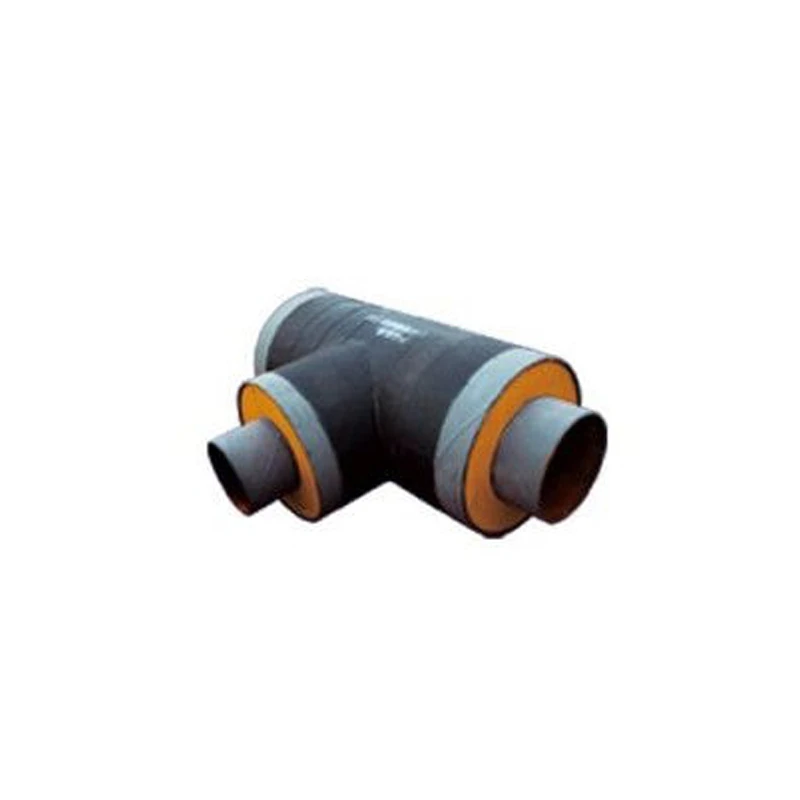
Anti Corrosion And Thermal Insulation Products
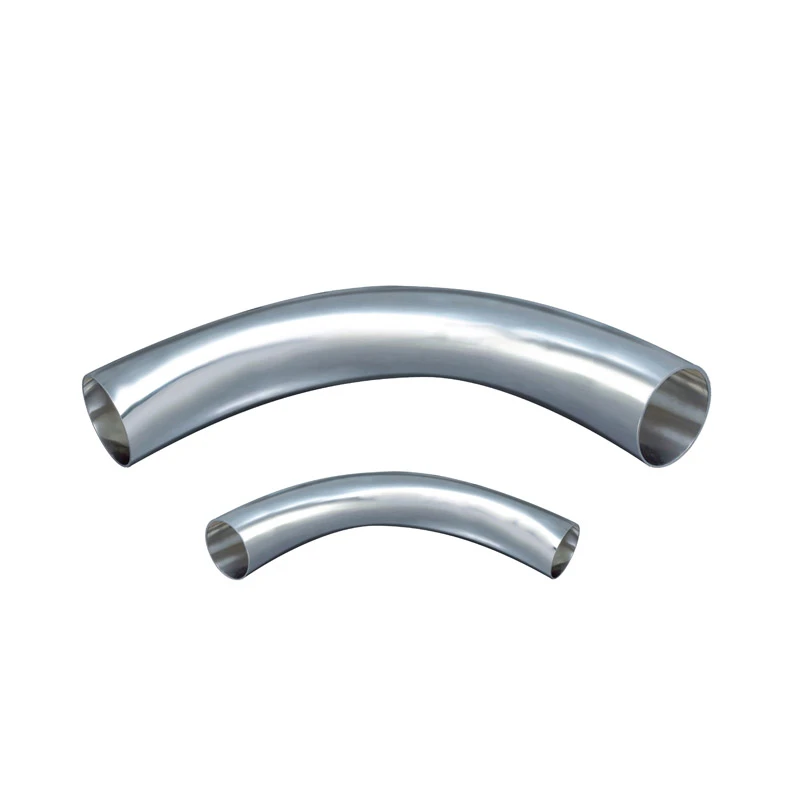
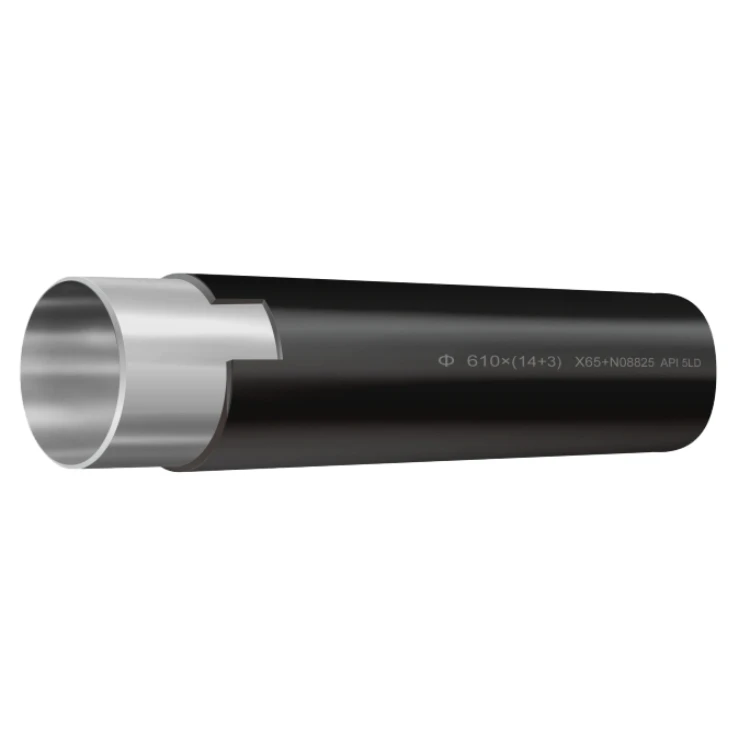
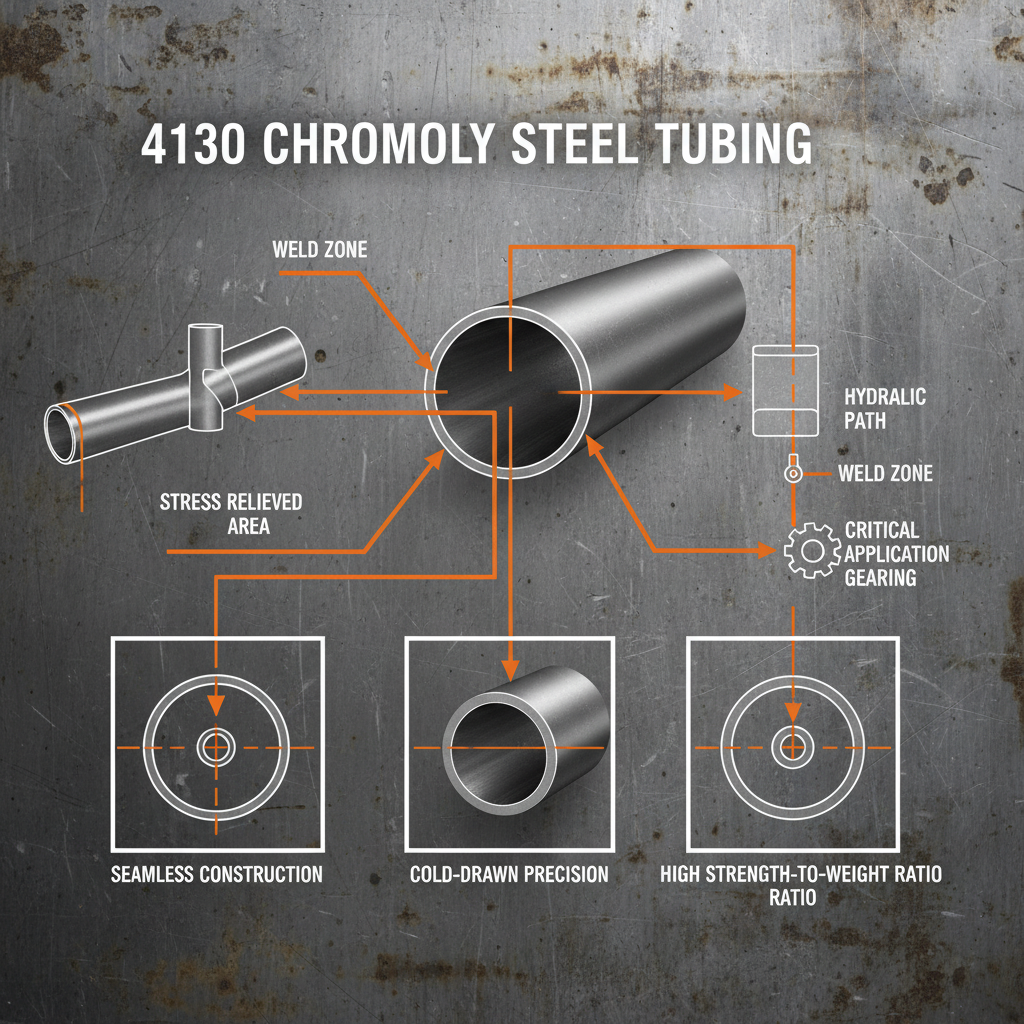
Ultimate Guide to 4130 Tubing Strength Performance and Applications
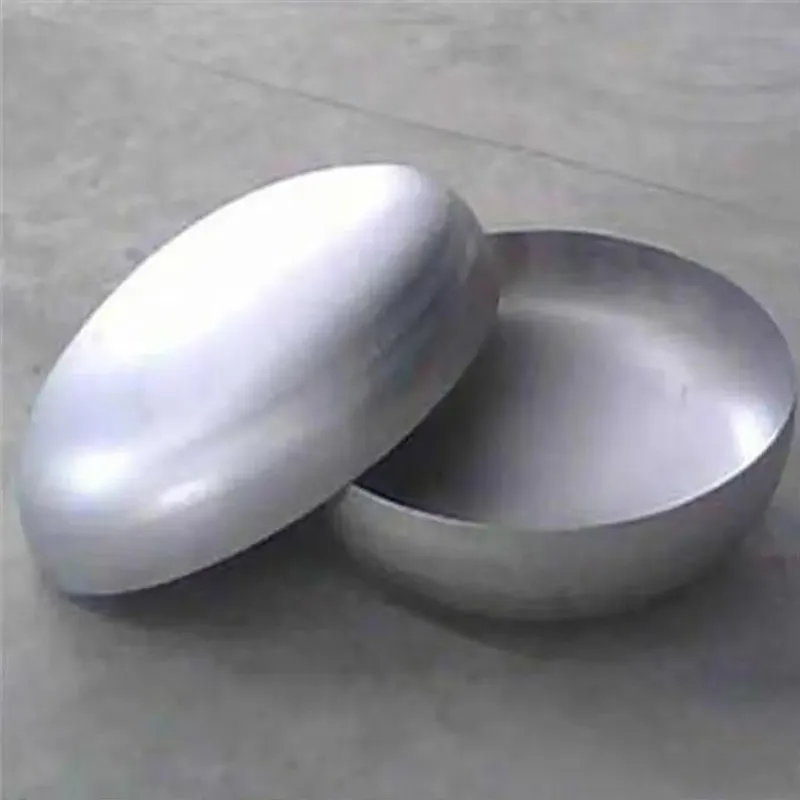
Pipe Cap-Cangzhou Lion Technology Co., Ltd.|Enhancing System Efficiency&Durability
Pipe Cap-Cangzhou Lion Technology Co., Ltd.|Enhancing System Efficiency&Durability
Pipe Cap-Cangzhou Lion Technology Co., Ltd.|Enhancing System Efficiency&Durability
Pipe Cap-Cangzhou Lion Technology Co., Ltd.|Enhancing System Efficiency&Durability
Pipe Cap-Cangzhou Lion Technology Co., Ltd.|Enhancing System Efficiency&Durability