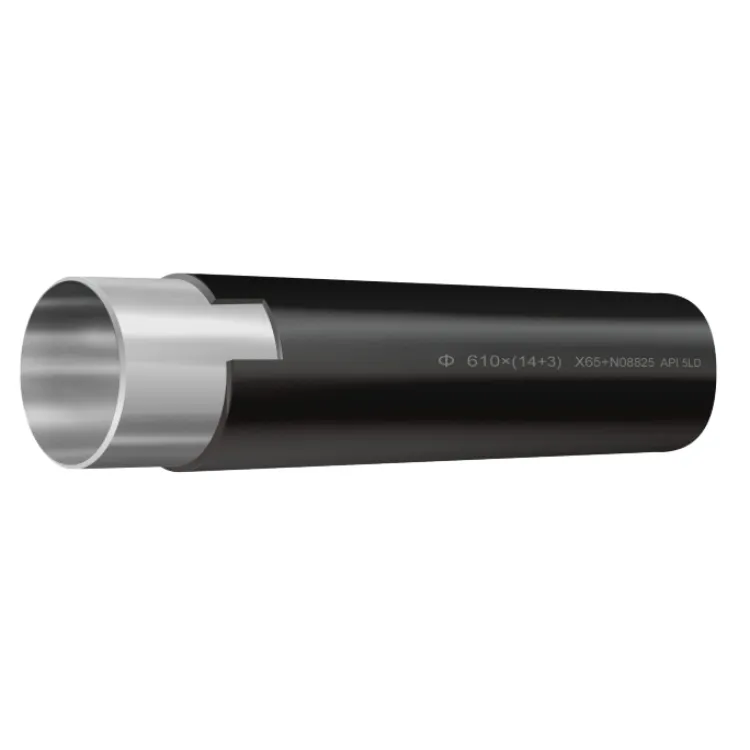



Reliable Industrial Solutions from Stainless Steel Pipe Suppliers
Selecting the appropriate connection components for high-pressure piping systems is a critical decision that directly impacts operational safety and long-term infrastructure integrity. For engineers managing corrosive environments in the petrochemical or energy sectors, the choice between standard alloy flanges and advanced clad solutions often determines the frequency of maintenance shutdowns. By integrating the mechanical strength of carbon steel with the superior corrosion resistance of high-performance alloys, these components address the paradox of requiring both structural rigidity and chemical inertness. Whether implementing a system for drinking water transport or high-pressure gas manifolds, understanding the technical nuances of overlay welding and material compatibility is essential for ensuring zero-defect performance in critical fluid handling systems.

Engineering Advantages of Clad and Stainless Steel Flange Architectures
The primary challenge in industrial piping is the balance between cost-efficiency and material longevity. Standard carbon steel provides the necessary structural support but fails rapidly under chemical attack. Conversely, solid stainless steel or nickel-based alloys offer excellent protection but are often prohibitively expensive for large-scale projects. Clad flanges, specifically those utilizing overlay welding, provide a strategic engineering compromise by applying a high-performance alloy layer onto a robust base metal surface.
This additive manufacturing approach enhances the flange's resistance to wear, abrasion, and extreme temperature fluctuations. The resulting bimetallic structure ensures that the inner wetted surfaces are protected by materials like duplex steel or Inconel, while the outer body maintains the mechanical strength required to withstand internal pressures up to PN 42Mpa. This configuration is particularly vital for sulfur and hydrogen-resistant applications where standard materials would suffer from stress corrosion cracking or hydrogen embrittlement.
- Enhanced Durability: Precise control over the alloy layer thickness optimizes the component for high-pressure environments.
- Material Synergy: Combines the toughness of alloy steel with the chemical stability of stainless steel.
- Reduced Lifecycle Costs: Significantly lowers the need for frequent replacements in harsh chemical processing plants.

Comparative Analysis of Carbon Steel and Stainless Steel Components
Deciding between carbon steel and stainless steel depends entirely on the fluid medium and the ambient environment. Carbon steel is the industry standard for non-corrosive applications due to its high structural integrity and cost-effectiveness. It is widely deployed in power generation and construction where high pressure is the primary concern rather than chemical degradation. However, in the presence of moisture or aggressive chemicals, carbon steel requires additional protective coatings to prevent oxidation.
Stainless steel flanges are indispensable in pharmaceutical, food processing, and chemical industries where hygiene and oxidation resistance are non-negotiable. These materials prevent staining and maintain a sterile environment, ensuring that the transported medium remains uncontaminated. For the most extreme conditions, such as offshore marine engineering or deep-sea oil extraction, the use of nickel-based alloys or clad structures is recommended to combat the combined effects of high salinity and high pressure.
The versatility of these components is further extended by various connection types. Slip-on, welding neck, and socket-weld designs allow for tailored installations based on the required sealing performance and ease of assembly, ensuring that fluid leakage is effectively prevented across a wide range of temperature gradients.
Critical Applications in Energy, Chemical, and Marine Engineering
In the oil and gas sector, the transport of raw hydrocarbons often involves highly corrosive elements like H2S and CO2. This requires the use of sulfur-resistant and hydrogen-resistant pipe fittings. The deployment of bimetallic clad flanges in gas manifold pipes ensures that the connection points—often the weakest links in a piping system—do not become the primary points of failure. By utilizing additive manufacturing for the inner walls of fittings, engineers can create a seamless barrier against corrosive agents.
Similarly, in power generation and marine engineering, components must withstand both internal pressure and external environmental stress. The ability to process diameters up to DN3500mm allows for the construction of large-scale water intake systems or heavy-duty industrial boilers. In these scenarios, the reliability of the sealing performance is paramount; a single leak in a high-pressure steam line can lead to catastrophic system failure and significant downtime.
Modern industrial requirements also emphasize the use of AI-powered visual judgment for defect detection during the manufacturing process. This ensures that components destined for critical infrastructure, such as those supplied to PetroChina or Sinopec, achieve a zero-defect pass rate before leaving the factory, thereby guaranteeing safety in high-risk operational environments.
Technical Selection Matrix for Industrial Piping Components
| Material Type | Corrosion Resistance | Mechanical Strength | Typical Application |
|---|---|---|---|
| Carbon Steel | Low (Requires Coating) | Very High | General Construction / Oil & Gas |
| Stainless Steel | High | Medium to High | Pharmaceutical / Food Grade |
| Bimetallic Clad | Very High (Surface) | High (Base Metal) | Chemical Processing / Energy |
| Nickel-Based Alloy | Extreme | High | Deep Sea / Extreme Heat |
| Duplex Steel | Very High | High | Marine Engineering / Desalination |
Quality Assurance and Certification Standards for Pressure Components
For high-pressure equipment, certification is not merely a formality but a safety requirement. Adherence to ISO9001 for quality management and ISO14001 for environmental impact ensures that the production process is consistent and sustainable. Furthermore, certifications like PED (Pressure Equipment Directive) and CPR are essential for components exported to European markets, as they verify that the equipment can safely operate under the specified pressure and temperature limits.
The inspection process must be comprehensive, involving both physical and chemical testing centers. Non-destructive testing (NDT) is employed to identify internal flaws without compromising the integrity of the part. By collaborating with scientific research institutes, manufacturers can implement additive manufacturing techniques that provide superior precision compared to traditional casting or forging, especially for thick-walled fittings with diameters reaching DN1200mm and beyond.
A robust quality system monitors every stage of production, from the raw material input to the final heat treatment. Utilizing large-scale natural gas heat treatment furnaces with temperature accuracy within 10 degrees Celsius ensures that the metallurgical properties of the steel are optimized, reducing internal stresses and preventing premature failure during service.
Procurement Strategies for Specialized Piping Infrastructure
When sourcing from stainless steel pipe suppliers, procurement managers should look beyond the initial price point and evaluate the total cost of ownership. This includes assessing the supplier's capacity for customization, such as the ability to provide X-steel grade large-diameter fittings or specialized sulfur-resistant materials. A supplier with an integrated R&D capability can offer tailored solutions that match the specific chemical composition of the transported fluid, thereby extending the equipment's service life.
Key evaluation criteria should include the manufacturer's equipment list—such as the presence of heavy-duty hydraulic presses (e.g., 6000T) and induction pushers—which indicates their ability to handle large-bore, thick-walled components. Additionally, checking the supplier's track record with major energy groups provides a proxy for their reliability and ability to meet stringent industrial standards.
Finally, the lead time and delivery efficiency are critical for project timelines. Choosing a partner with a high annual production capacity (such as 20,000 tons for clad pipes) reduces the risk of project delays. Future procurement trends are shifting toward "zero-defect" delivery, where AI-driven inspection and rigorous material certification are standard requirements for all critical piping components.
Technical FAQ: Industrial Flanges and Clad Piping
What is the primary difference between a solid stainless steel flange and a clad flange?
A solid stainless steel flange is made entirely of stainless alloy, offering uniform corrosion resistance but at a higher cost. A clad flange uses a carbon or alloy steel base for structural strength and an overlay welding layer of a high-performance alloy on the surface, providing similar corrosion protection at a more cost-effective price point for large components.
In which industries are bimetallic clad pipes most commonly used?
They are primarily used in the oil and gas, chemical processing, and energy industries, specifically for transporting highly corrosive fluids, drinking water, or high-pressure gases where standard carbon steel would degrade too quickly.
What are the advantages of using overlay welding for flange surfaces?
Overlay welding allows for precise control over the thickness and quality of the protective alloy layer. This enhances resistance to abrasion and chemical attack while maintaining the mechanical integrity of the base metal, making it ideal for high-pressure and high-temperature applications.
Can clad flanges handle pressures up to 42Mpa?
Yes, provided the base metal is correctly selected and the manufacturing process follows strict pressure vessel standards. High-pressure thick-walled fittings are specifically designed to handle these loads while the clad layer manages the chemical environment.
What certifications should I verify when purchasing pressure piping components?
You should verify ISO9001 for quality management, ISO14001 for environmental standards, and specific product certifications such as PED (Pressure Equipment Directive) and CPR, depending on the region of installation.
How does AI technology improve the quality of industrial pipe fittings?
AI is used in the non-destructive testing (NDT) phase to empower professionals in making visual judgments of defects more accurate. This reduces human error in defect detection, helping manufacturers achieve a zero-defect delivery rate.
Technical References and Industry Standards
- ISO International Organization for Standardization - Quality Management Systems
- ASME Boiler and Pressure Vessel Code (BPVC) Standards
- ASTM International - Material Specifications for Stainless Steel
- EU Pressure Equipment Directive (PED) Regulations
For engineers and procurement specialists seeking reliable piping solutions, the integration of advanced material science and rigorous quality control is the only way to ensure long-term operational stability. By choosing components that balance strength and resistance, you can significantly reduce maintenance overhead and enhance the safety of your industrial infrastructure.
Related Technical Insights