Prefabricated pipe selection depends on the process medium, temperature and pressure demands, nominal diameter, and assembly layout. Factory Prefabricated Products covers DN15 to DN1800 and four material routes: carbon steel for general service, alloy steel for demanding heat and pressure, stainless steel for corrosion or hygiene, and bimetal composite for combined corrosion and wear.
Process compatibility: match carbon steel, alloy steel, stainless steel, or bimetal composite to the line's temperature, pressure, corrosion, hygiene, strength, toughness, and wear demands.
Dimensional and assembly fit: confirm the nominal diameter from DN15 to DN1800, then provide the component arrangement, connection locations, and welding requirements for factory assembly.
The process environment determines which prefabricated pipe material deserves consideration. We supply factory-assembled pipe fittings for industrial work, including petrochemical and coal chemical projects, where the line may face general service, high temperature, high pressure, corrosion, hygiene requirements, wear, or a combination of these conditions.
Carbon steel is suited to general industrial environments that call for balanced mechanical properties, moderate strength, and moderate corrosion resistance. It is a sensible route for maintenance, renovation, and infrastructure work when the process does not impose the more demanding conditions associated with the other material choices.
Alloy steel is intended for special working conditions that require strength, toughness, and wear resistance. High-temperature and high-pressure reaction equipment is the clearest application fit. Include those operating conditions early so the material decision is made with the equipment duty in view.
Stainless steel is the appropriate starting point for corrosion-sensitive or hygienic service. Food, pharmaceutical, and chemical facilities can use this route when environmental cleanliness and corrosion resistance guide the selection.
Bimetal composite pipe fittings are suited to service that combines structural and internal-surface demands. The outer high-strength metal provides structural support, while the inner functional metal can address corrosion or wear. This option fits a line where the process medium and mechanical conditions create two different material demands within the same fitting.
Our production scope covers pipe fittings from DN15 to DN1800. The small end of this range fits precision work around smaller equipment connections, while the large end fits major industrial piping and infrastructure projects. The useful purchasing step is to assign an exact nominal diameter to every fitting in the arrangement instead of treating the project as one general size request.
For a small equipment maintenance or renovation job, match each replacement fitting to the existing line dimensions and connection points. A DN15 fitting belongs to that small-bore planning process, where component position and interface details need close attention. For a DN1800 installation, the finished route, connection locations, and handling plan should be settled before fabrication because the fitting belongs to a large industrial assembly.
The size range does not remove the need for a layout. Send the nominal diameter, component arrangement, and connection locations together so we can review the fitting as part of the line.
Factory prefabrication is a good fit when component positions must be established before the fitting reaches the installation area. We carry out assembly according to customer requirements, using high-precision measuring tools and positioning technology to place components accurately and control tolerance. The assembly is then welded and formed.
Picture a petrochemical line with several connection points. A fitting prepared around the intended route can be reviewed as an assembled section, with its interfaces and component positions identified in advance. For a renovation, the same approach helps organize a replacement around the existing line dimensions and the location where the fitting will be installed.
Welding is part of the configuration decision. Our welding team works with multiple welding processes and selects methods and parameters according to the material and welding requirement. A request that includes only a nominal diameter leaves out information that affects the assembly. Add the material route, service conditions, arrangement, connection locations, and any project welding requirements.
Choose carbon steel when the line has general industrial duties and the project requires a balanced mechanical property profile with moderate strength and corrosion resistance. This route is suitable for buyers organizing standard fitting requirements across maintenance, renovation, or infrastructure work.
Choose alloy steel when high temperature, high pressure, strength, toughness, or wear resistance sets the selection conditions. It is the best fit among these four routes for special reaction equipment duties where the fitting must be planned around demanding process service.
Choose stainless steel when corrosion resistance and hygienic performance lead the decision. The food, pharmaceutical, and chemical sectors are relevant application settings. Describe the process medium and cleanliness requirements with the requested dimensions so the fitting is considered in its actual service context.
Choose bimetal composite when the line needs structural support from one metal and corrosion-resistant or wear-resistant performance from an internal metal. This route suits harsh service where corrosion and wear occur together and a single material characteristic does not address the full requirement.
A useful request connects four details: the process environment, the material route, the nominal diameter, and the assembly layout. For a small-bore maintenance order, list each DN15-class connection and its existing interface. For a large project, identify the DN15 to DN1800 sizes used across the line, the connection locations, and the arrangement of the fabricated sections.
Include welding requirements and quantity as well. We can then review whether carbon steel, alloy steel, stainless steel, or bimetal composite matches the stated service and whether the requested factory assembly corresponds to the intended route.
Factory Prefabricated Products suits industrial buyers who need customer-specified pipe fitting assembly across DN15 to DN1800. Select carbon steel for general service, alloy steel for demanding heat and pressure, stainless steel for corrosion or hygiene, and bimetal composite for combined corrosion and wear. Send the process medium, temperature and pressure conditions, nominal diameters, connection drawings, welding requirements, arrangement, and quantity for a quotation review.

About the author
The company
Cangzhou Lion Technology Co., Ltd. is located in Mengcun County Economic Development Zone, Cangzhou City, Hebei Province, is a professional high-tech enterprise integrating the research, development, production and sales of clad pipes and pipe fittings, with a registered capital of 100.8 million yuan, a plant area of 75,000 square meters and 120 employees.…
About Us ↗Visit company website ↗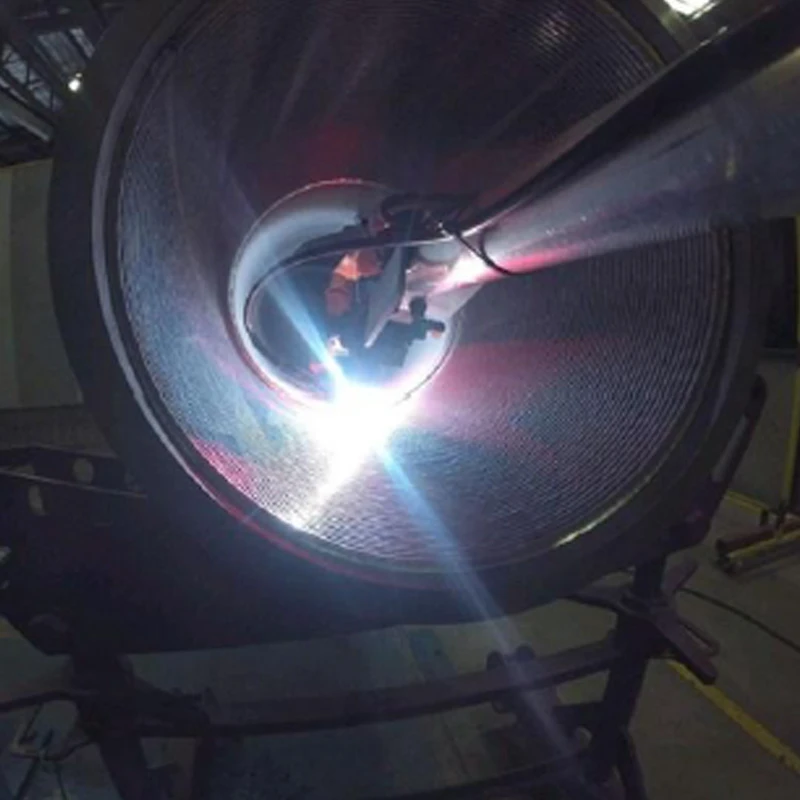

SS Pipe Cap FAQ: Fit, Connections, Materials and Uses

Mechanical Steel Pipe Comparison: Materials, Standards and Supplier Documentation

Choosing an SS Bend Pipe: Application Fit and Specification Checks

High Performance Sink Pipe Steel Guide for Industrial Piping

Ultimate Guide to Industrial Seamless Steel Pipe for Piping