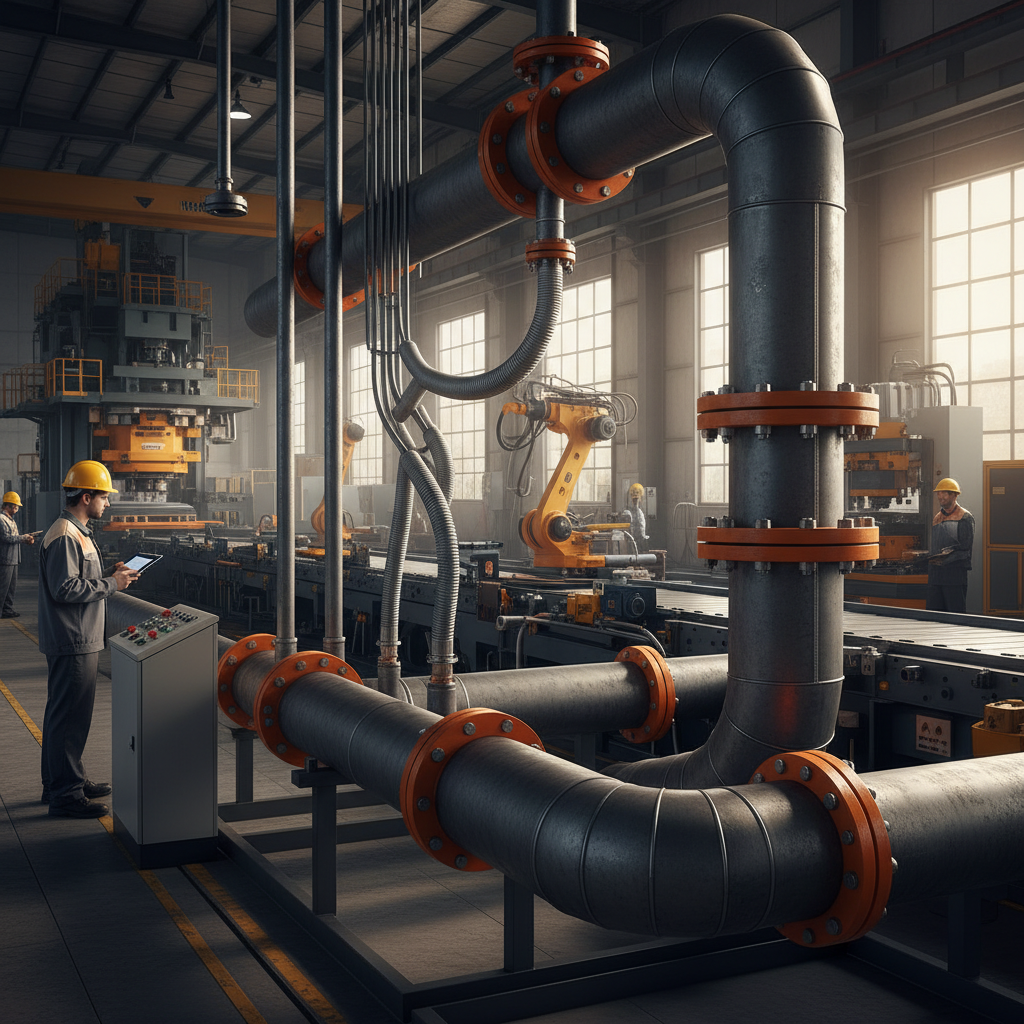
When transporting oil and gas in environments characterized by high hydrogen sulfide and carbon dioxide levels, the industry faces a critical material dilemma. Standard carbon steel pipelines often succumb to rapid corrosion, leading to potential leaks and systemic failures, while pure stainless steel options impose prohibitive capital expenditures that can jeopardize project viability. This tension drives the demand for high-performance alternatives that balance chemical resistance with mechanical strength.
Selecting the right steel tube manufacturers is no longer just about procurement; it is about integrating material science with environmental risk management. For energy infrastructure, the shift toward bimetallic clad pipes and specialized corrosion-resistant alloys represents a strategic move to extend asset lifecycles. By combining a high-strength outer shell with a corrosion-resistant inner lining, operators can achieve the durability of expensive alloys at a fraction of the total cost.
This analysis explores the technical framework of mechanical clad steel pipes and the criteria for evaluating industrial suppliers. By examining standards such as API 5LD and DNV OS F101, we provide a roadmap for engineers and procurement officers to optimize their pipeline specifications. Learn how steel tube manufacturers are utilizing additive manufacturing and bimetallic bonding to solve the most aggressive corrosion challenges in the energy sector.


Mechanical clad steel pipes are engineered as composite structures designed to merge the benefits of two distinct metals. The outer layer typically consists of a high-strength carbon steel that provides the necessary structural integrity to withstand high internal pressures and external loads. The inner layer, or the "clad" portion, is composed of a corrosion-resistant alloy (CRA) such as stainless steel, duplex steel, or nickel-based alloys, which protects the pipe from the chemical aggression of the transported medium.
These products are manufactured under strict international frameworks, specifically API 5LD and DNV OS F101. Unlike traditional coated pipes, mechanical cladding ensures a robust bond between the layers, preventing delamination under severe thermal cycling or pressure fluctuations. This architecture allows the pipeline to function as a single structural unit while maintaining a chemical barrier that is virtually impermeable to corrosive agents like H2S and CO2.
The operational lifespan of a pipeline depends heavily on the synergy between material selection and environmental conditions. The primary factor is the corrosion resistance of the inner lining; for instance, in high-sulfur environments, nickel-based alloys or Inconel are often preferred over standard 304 stainless steel to prevent stress corrosion cracking. The integrity of the bond between the bimetal layers is equally critical, as any void or gap can lead to localized corrosion and eventual structural failure.
True reliability in high-pressure systems is achieved when the high-strength outer steel's toughness matches the inner alloy's corrosion resistance, ensuring the pipe can absorb impact energy without sacrificing its chemical shield.
Furthermore, temperature control during the manufacturing process is paramount. Advanced heat treatment furnaces with precision control (within 10 degrees Celsius) ensure that the metallurgical properties of both the carbon steel and the clad alloy are preserved. Inconsistent cooling or overheating can lead to brittle zones, which are the primary failure points in deep-sea or high-pressure underground installations.
From a CAPEX perspective, utilizing bimetallic clad pipes offers a significant advantage over solid alloy pipes. By concentrating the expensive corrosion-resistant material only where it is needed—the inner wall—manufacturers can reduce material costs by 40% to 70% without compromising the pipeline's service life. This makes the exploitation of highly corrosive oil and gas fields economically feasible.
Beyond initial costs, the value manifests in the reduction of OPEX. The excellent corrosion resistance of clad pipes significantly reduces the frequency of pigging operations and the need for chemical corrosion inhibitors. This leads to a lower total cost of ownership (TCO) over a 25-year operational cycle compared to carbon steel pipes that require frequent replacement or intensive maintenance.
Bimetallic clad pipes are indispensable in the petrochemical and marine engineering sectors. In offshore oil extraction, these pipes handle raw crude that contains high levels of salt and acidic gases. The ability to specify different inner linings—ranging from copper alloys for specific heat exchange needs to titanium for extreme chemical resistance—allows engineers to tailor the pipeline to the exact chemistry of the reservoir.
In addition to raw extraction, these products are widely used in chemical processing plants for transporting hazardous acids and alkalis. The use of factory prefabricated products, including clad elbows and tees, ensures that the corrosion protection remains seamless across joints and bends, eliminating the "weak points" typically found in field-welded carbon steel systems.
The industry is moving toward additive manufacturing for the inner walls of pipe fittings. Arc and laser additive manufacturing allow for the precise deposition of corrosion-resistant alloys onto the interior of forged components. This technology ensures a denser, more uniform protective layer compared to traditional cladding methods, which is essential for high-pressure thick-walled fittings.
Another significant trend is the integration of AI in non-destructive testing (NDT). By utilizing AI-powered visual judgment, manufacturers can detect microscopic defects in the bimetal bond with far greater accuracy than manual inspection. This "zero-defect" approach is becoming the standard for suppliers serving major energy groups, as the cost of a single failure in a deep-sea pipeline can be catastrophic.
Lastly, there is a growing demand for "X-steel" grade large-diameter fittings. These are designed for extreme pressure environments, combining the benefits of high-yield strength steel with the protective properties of nickel-based alloys, enabling safer transportation of gas in deeper and more challenging geological formations.
One of the primary challenges in deploying clad pipelines is the welding of bimetallic joints. Since the outer and inner layers have different melting points and thermal expansion coefficients, specialized welding procedures are required to prevent cracking. The use of factory-prefabricated components—such as clad flanges and reducers—minimizes the amount of field welding required, thereby reducing the risk of installation-induced defects.
Compatibility with existing infrastructure also poses a challenge. Transitioning from a carbon steel system to a clad system requires precise engineering of the transition joints to avoid galvanic corrosion. Proper insulation and the use of anti-corrosion insulated pipes are often necessary to maintain thermal stability and prevent external environmental degradation.
To mitigate these risks, the industry is shifting toward a "modular" approach. By maximizing the use of factory-prefabricated modules that include all necessary fittings, operators can ensure that 100% of the critical joints are tested in a controlled environment using NDT technology before they ever reach the project site.
| Medium Type | Inner Lining Material | Outer Shell | Key Performance |
|---|---|---|---|
| Drinking Water | 304 Stainless Steel | Carbon Steel | Hygiene & Strength |
| High H2S Gas | Nickel Alloy/Inconel | X-Steel Grade | Sulfur Resistance |
| Acidic Crude | Duplex Stainless | Alloy Steel | Pitting Resistance |
| Chemical Acid | Titanium/Tantalum | Carbon Steel | Extreme Inertness |
| High Pressure Gas | 316L Stainless | High-Strength Steel | Pressure Containment |
| Brine/Sea Water | Copper Alloys | Coated Steel | Biofouling Control |
Lined pipes typically use a mechanical fit or adhesive to hold the inner layer in place, whereas clad pipes feature a metallurgical bond created through processes like hot rolling or additive manufacturing. Clad pipes are superior for high-pressure and high-temperature applications because the metallurgical bond prevents the lining from collapsing or delaminating under vacuum or extreme thermal cycling.
For bimetallic clad steel pipes, you should ensure the manufacturer adheres to API 5LD (Specification for Line Pipe) and DNV OS F101 (Submarine Pipeline Systems). These standards govern the bonding quality, material purity, and testing requirements necessary for safety in the energy and marine sectors. Additionally, ISO 9001 and PED certifications indicate a robust quality management system.
Quality is ensured through a combination of high-precision heat treatment and advanced non-destructive testing (NDT). Using AI-powered visual inspection and ultrasonic testing, manufacturers can identify voids or lack of fusion between the layers. Strict temperature control (within 10°C) during the cooling phase also prevents the formation of brittle phases that could weaken the bond.
No, clad pipes are significantly more cost-effective. Because they only use the expensive corrosion-resistant alloy for the inner lining and utilize carbon steel for the structural outer shell, they drastically reduce the amount of high-cost material required. This allows projects to maintain the same level of corrosion protection as solid alloy pipes but at a much lower total capital cost.
Yes, they are specifically designed for this. By using high-strength carbon steel or X-steel grades for the outer shell, clad pipes can withstand pressures up to 42Mpa. The structural load is carried by the outer shell, while the inner lining handles the chemical environment, making them ideal for deep-sea extraction and high-pressure gas manifolds.
Depending on the lining material and the aggressiveness of the medium, a well-engineered clad pipeline can last 25 to 50 years. The primary advantage is that it avoids the rapid degradation seen in carbon steel, provided that the inner lining is correctly matched to the chemicals (e.g., using nickel alloys for H2S) and the joints are properly welded.
The transition toward bimetallic clad piping represents a critical evolution in energy infrastructure. By resolving the conflict between mechanical strength and chemical resistance, the industry can now exploit challenging reservoirs that were previously considered too corrosive or too expensive to develop. The integration of additive manufacturing and AI-driven quality control ensures that these complex composite structures meet the zero-defect requirements of modern global energy standards.
Selecting a partner with a proven track record in high-pressure thick-walled fittings and a commitment to international standards is essential for long-term asset reliability. For organizations seeking to optimize their pipeline durability and reduce lifecycle costs, exploring advanced cladding solutions is the most viable path forward. You can find detailed technical specifications and customization options by visiting the experts at www.lion-pipeline.net.